Chicken Parmesan Recipe
Introduction
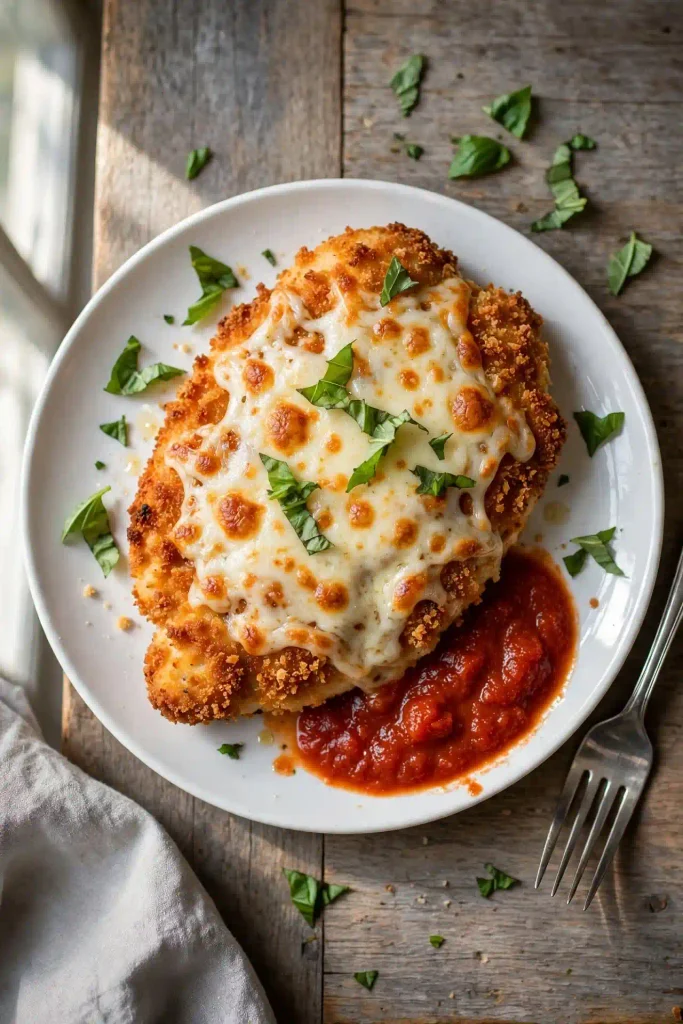
This chicken parmesan recipe uses a fry-then-bake method: cutlets get a quick pan-sear to set the crust, then finish under mozzarella and marinara in the oven. That order matters. Baking a breaded cutlet from raw in sauce steams the coating instead of crisping it. Frying first locks in the crunch, and the short oven finish melts the cheese and brings the chicken to a safe internal temperature without drying it out. The result is a crust that holds its texture even after the sauce goes on.
Quick Facts
- Prep time: 20 minutes
- Cook time: 20 minutes
- Total time: 40 minutes
- Servings: 4
- Calories: About 720 kcal per serving (full breakdown in the Nutrition section below)
- Category: Main course
- Method: Pan-fried, then oven-baked
Why This Recipe Works
This chicken parmesan recipe uses a fry-then-bake order for a reason:
- Frying before baking protects the crust. The panko coating sets in hot oil first, so it doesn’t absorb sauce and turn soggy in the oven.
- Pounding the chicken to an even thickness prevents dry edges. Uneven cutlets cook unevenly, since thin spots dry out before thick spots finish.
- Parmesan mixed into the breadcrumbs, not just on top, seasons the crust all the way through, instead of relying on a final sprinkle for flavor.
- A short, hot bake keeps the cheese from overcooking while still bringing the chicken to a safe internal temperature.
Ingredients
Everything below is what this chicken parmesan recipe actually calls for, with no filler ingredients added just to pad the list.
- 2 large boneless, skinless chicken breasts (about 1½ lb / 680 g), pounded to ½-inch (1.25 cm) thickness
- 1 teaspoon (6 g) salt, divided
- ½ teaspoon (1 g) black pepper
- ½ cup (65 g) all-purpose flour
- 2 large eggs, beaten
- 1 cup (60 g) panko breadcrumbs
- ½ cup (50 g) grated Parmesan cheese, plus ¼ cup (25 g) more for topping
- 1 teaspoon (2 g) dried Italian seasoning
- ⅓ cup (80 ml) olive oil, for frying
- 2 cups (480 ml) marinara sauce
- 1½ cups (170 g) shredded mozzarella cheese
- Fresh basil leaves, torn, for garnish (optional)
Equipment
This chicken parmesan recipe doesn’t need specialty gear, but two tools make a real difference. A large oven-safe skillet, cast iron or stainless steel, lets you fry the cutlets and finish them under the broiler or in the oven in the same pan. That means the crust never has to be transferred while hot and fragile, so it stays intact. An instant-read thermometer is worth using here too: chicken breast looks done well before it’s actually at a safe internal temperature, and color alone isn’t a reliable doneness cue.
Substitutions
A few swaps work well in this chicken parmesan recipe without changing the method:
- Chicken thighs instead of breasts: boneless, skinless thighs work and stay slightly more forgiving if overcooked, but they won’t give you the same wide, flat cutlet shape, so the breading-to-meat ratio will be higher.
- Italian breadcrumbs instead of panko: they’ll work, but the crust will be denser and less shatteringly crisp than panko’s larger, airier flakes.
- Jarred marinara instead of homemade: perfectly fine for this recipe. Just pick one without added sugar as the first few ingredients if you want a less sweet sauce.
- Provolone instead of mozzarella: provolone melts a little firmer and adds a sharper flavor; mozzarella stays milder and stretchier.
Step-by-Step Instructions
- Pound the chicken. Place each chicken breast between two sheets of plastic wrap and pound with a meat mallet or heavy skillet to an even ½-inch (1.25 cm) thickness. Season both sides with ½ teaspoon of the salt and the pepper.
- Set up three dredging stations. In one shallow bowl, place the flour. In a second, whisk the eggs. In a third, combine the panko, Parmesan, Italian seasoning, and remaining ½ teaspoon salt.
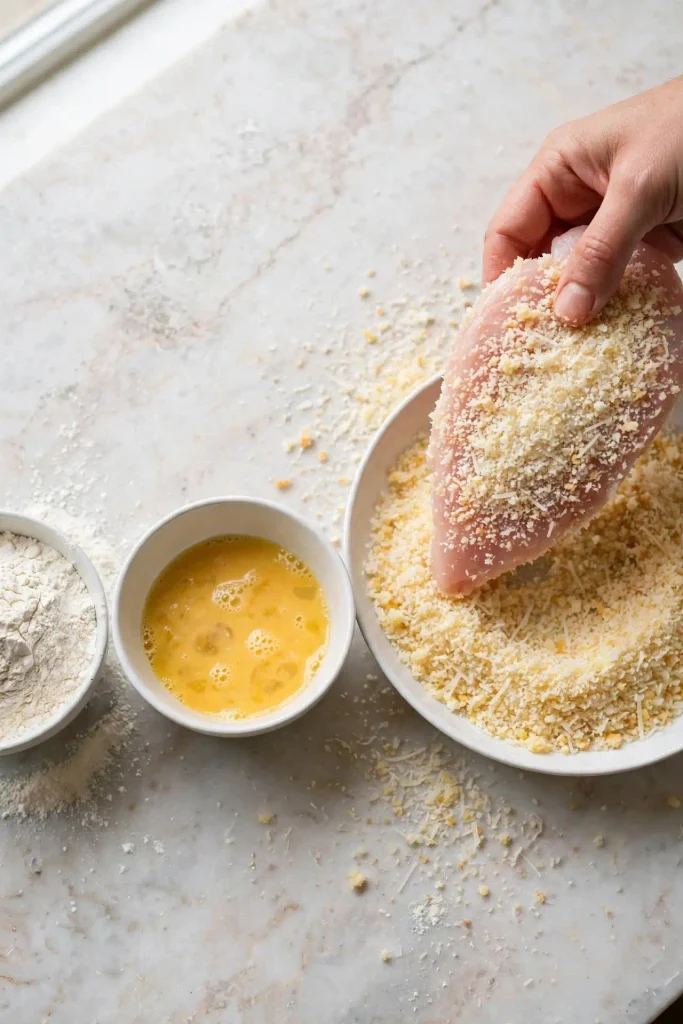
- Dredge each cutlet. Coat in flour, shaking off the excess. Dip into the egg, letting excess drip off. Press into the breadcrumb mixture on both sides, pressing firmly so the coating adheres. Set the breaded cutlets on a wire rack and let them rest for 5 minutes before frying. This helps the coating hold together in the oil instead of flaking off.
- Fry the cutlets. Heat the olive oil in a large oven-safe skillet over medium heat until it shimmers, about 350°F (175°C). Fry the cutlets 3 to 4 minutes per side, until deep golden brown and the crust feels set when pressed with tongs. The chicken won’t be fully cooked through yet; that finishes in the oven.
- Preheat the oven to 425°F (220°C) while the cutlets fry.
- Top and bake. Transfer the fried cutlets to a plate lined with paper towels for a moment to drain excess oil, then return them to the skillet (or a baking dish). Spoon marinara sauce over the center of each cutlet, leaving the edges of the crust exposed so they stay crisp. Top with the shredded mozzarella and remaining Parmesan.
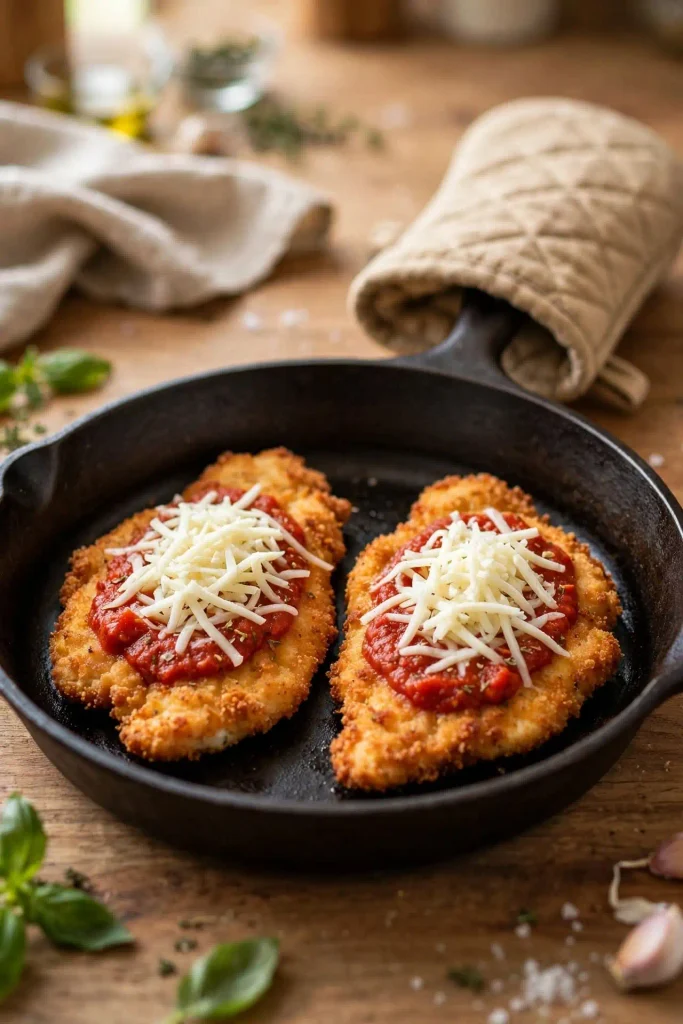
- Bake for 10 to 12 minutes, until the cheese is fully melted and beginning to bubble at the edges and the chicken reaches an internal temperature of 165°F (74°C) at the thickest part, checked with an instant-read thermometer.
- Rest for 5 minutes before serving. This lets the cheese set slightly so it doesn’t slide off when you cut into the chicken. Garnish with torn basil if using.
Tips
- Pound the chicken to an even thickness before you season or bread it. An uneven cutlet is the single biggest cause of a dry chicken parmesan recipe outcome, since the thin end overcooks while the thick end is still catching up.
- Press the breadcrumbs on with the flat of your hand rather than sprinkling them; a firmly packed crust is far less likely to slide off in the oil.
- Don’t crowd the skillet. Fry in batches if needed; cutlets that touch will steam instead of brown.
- Leave a border of crust uncovered by sauce and cheese so it stays crisp instead of going soft under the toppings.
Common Mistakes
- Sauce added before frying, or the cutlet baked from raw. This steams the breading instead of crisping it, which is the most common reason a chicken parmesan recipe turns out soggy. Fry first, always.
- Skipping the thermometer. A breaded, sauced, cheese-covered cutlet is hard to judge by cutting into it; the crust and toppings can look done well before the center is safe to eat.
- Breadcrumbs not pressed on firmly. Loose crumbs fall off in the oil, leaving bald patches instead of an even crust.
- Oil too cool. If the oil isn’t hot enough before the cutlets go in, they absorb oil instead of searing, leading to a greasy rather than crisp result.
Storage
Refrigerate leftovers in an airtight container for up to 3 days. Store the cutlets separately from extra sauce if possible; a cutlet sitting in sauce in the fridge will lose some crispness by the time you reheat it, though the flavor holds up fine either way.
Freezing
This chicken parmesan recipe freezes better before the sauce and cheese go on. Freeze the fried, unsauced cutlets in a single layer until solid, then transfer to a freezer bag for up to 2 months. Thaw in the refrigerator overnight, then top with sauce and cheese and bake as directed, adding a few extra minutes since the chicken starts colder. Already-assembled, fully baked chicken parmesan can be frozen too, but expect a softer crust after thawing and reheating.
Reheating
Reheat in a 375°F (190°C) oven for 12 to 15 minutes, uncovered, until warmed through. This method keeps more crispness than a microwave, which softens the crust. If reheating from frozen, add about 10 extra minutes and check that the center reaches 165°F (74°C).
Variations
- Chicken Parmesan Sliders: slice the baked cutlets into pieces sized for slider buns, and serve with extra warm marinara for dipping.
- Lighter version: bake the breaded cutlets on a wire rack at 425°F (220°C) instead of frying, flipping once, until golden, then top and finish as directed. The crust will be less deeply browned but noticeably less oily.
- Spicy chicken parmesan recipe variation: add ¼ to ½ teaspoon crushed red pepper flakes to the breadcrumb mixture, and use an arrabbiata-style sauce in place of standard marinara.
What to Serve With It
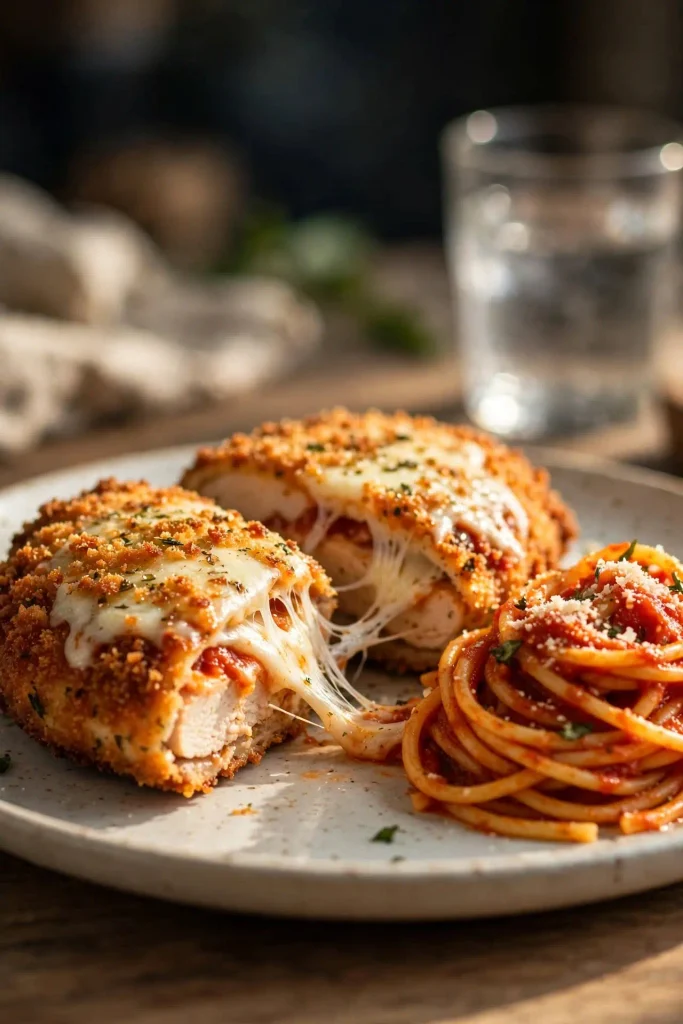
This chicken parmesan recipe pairs naturally with spaghetti or another long pasta tossed in a little of the marinara, or with a simple green salad and garlic bread if you want something lighter alongside it. Roasted broccoli or a sautéed leafy green also works well to balance the richness of the cheese and crust.
FAQ
Can I make this chicken parmesan recipe without frying? Yes. Bake the breaded cutlets on a wire rack set over a sheet pan at 425°F (220°C), flipping once, until golden, then top with sauce and cheese and finish baking as directed. The crust will be lighter in color and less deeply crisp than the fried version, but it’s noticeably less oily.
Why is my chicken parmesan soggy? The most common cause is sauce going on before the crust is set, or baking the cutlet from raw instead of frying it first. Steam from the raw chicken and the sauce softens the breading. Frying first, and leaving a border of crust exposed rather than fully covering it in sauce and cheese, both help keep it crisp.
What’s the difference between chicken parmesan and chicken parmigiana? They’re the same dish under two names: “parmigiana” is closer to the Italian-American original term, while “parmesan” is the more common name in casual U.S. usage. Recipes and methods don’t differ based on which name is used.
Can I use pre-shredded mozzarella? Yes, though block mozzarella that you shred yourself melts a bit more smoothly, since pre-shredded bags are coated in anti-caking starch that can make the melt slightly grainier.
How do I know the chicken is fully cooked? Check with an instant-read thermometer at the thickest part of the cutlet; it should read 165°F (74°C). Because the crust and cheese can look fully done before the center is, color and appearance alone aren’t reliable here.
How many calories are in chicken parmesan? This chicken parmesan recipe runs about 720 calories per serving, based on the ingredients listed above. That figure will shift depending on your marinara brand, how much oil the cutlets absorb while frying, and how generously you portion the cheese. See the full Nutrition breakdown in the Recipe Card below.
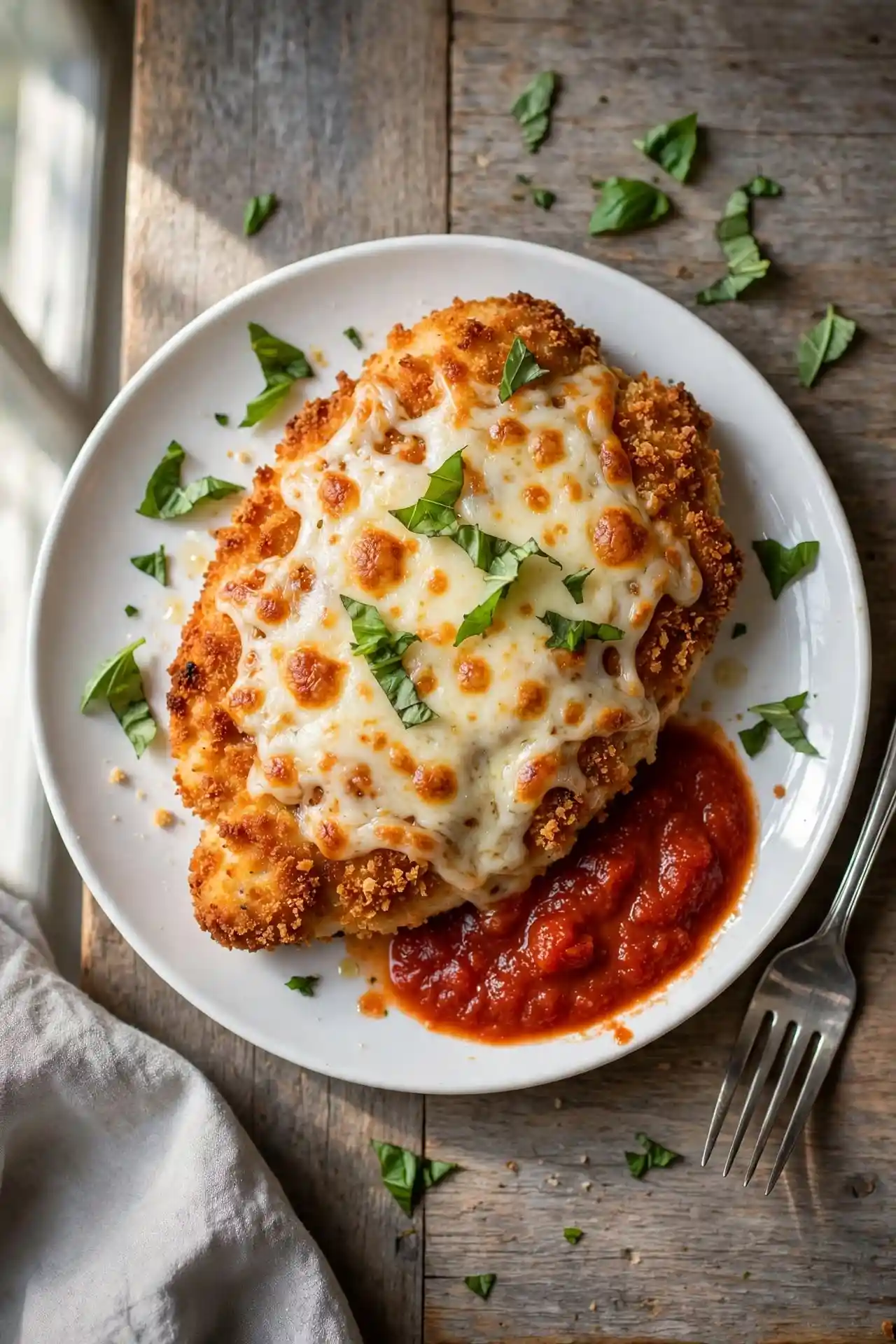
Chicken Parmesan
Ingredients
Equipment
Method
- Pound chicken breasts to an even ½-inch (1.25 cm) thickness. Season with ½ teaspoon salt and the pepper.
- Set up three bowls: flour; beaten eggs; and panko mixed with ½ cup Parmesan, Italian seasoning, and remaining ½ teaspoon salt.
- Dredge each cutlet in flour, then egg, then the breadcrumb mixture, pressing firmly to adhere. Rest on a rack 5 minutes.
- Heat olive oil in a large oven-safe skillet over medium heat to about 350°F (175°C). Fry cutlets 3–4 minutes per side until deep golden brown.
- Preheat oven to 425°F (220°C).
- Return cutlets to the skillet, top with marinara sauce (leaving a crust border exposed), mozzarella, and remaining ¼ cup Parmesan.
- Bake 10–12 minutes, until cheese is melted and bubbling and chicken reaches 165°F (74°C) internal.
- Rest 5 minutes, garnish with basil, and serve.
Notes
- Frying before baking is what keeps the crust crisp under the sauce, so don’t skip that step or bake from raw.
- Use an instant-read thermometer; the crust and cheese can look done before the chicken actually is.