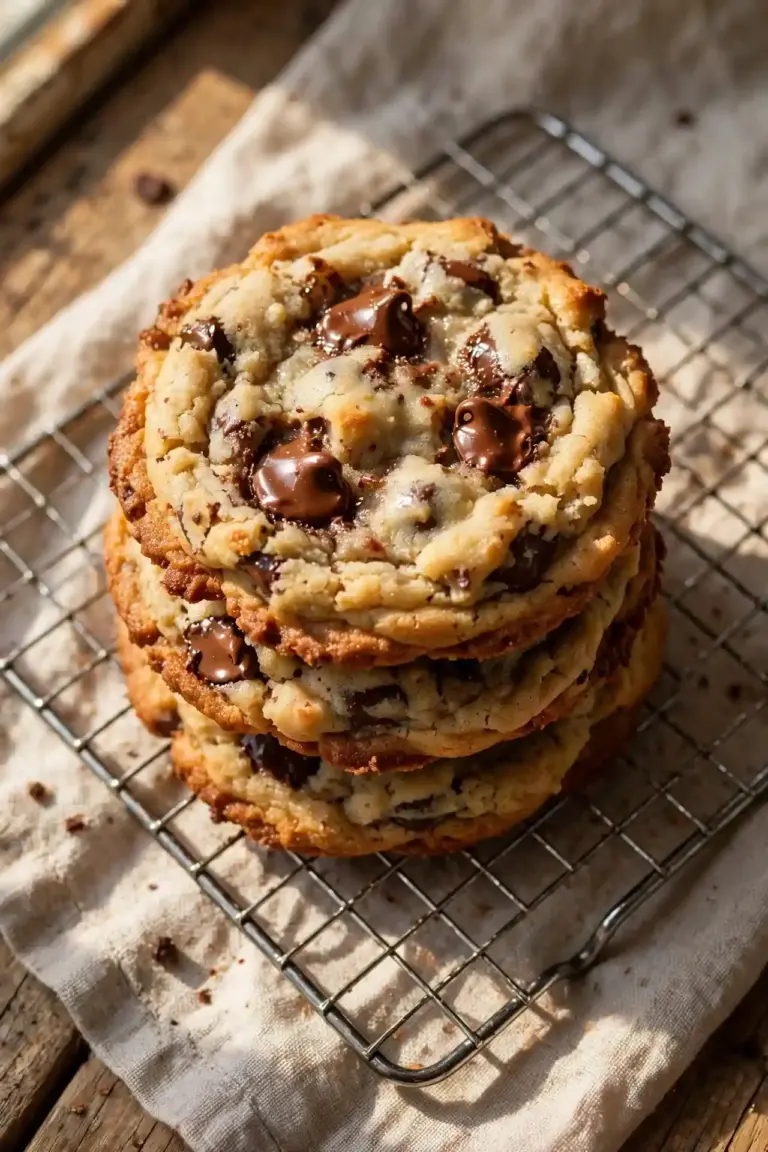
Sugar Cookies Recipe
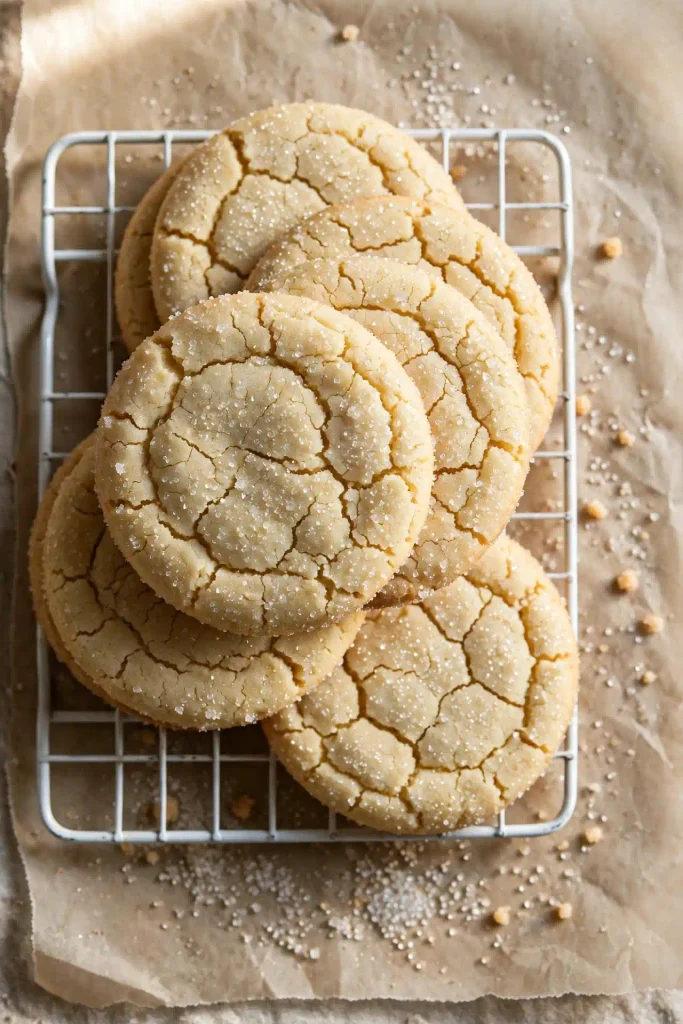
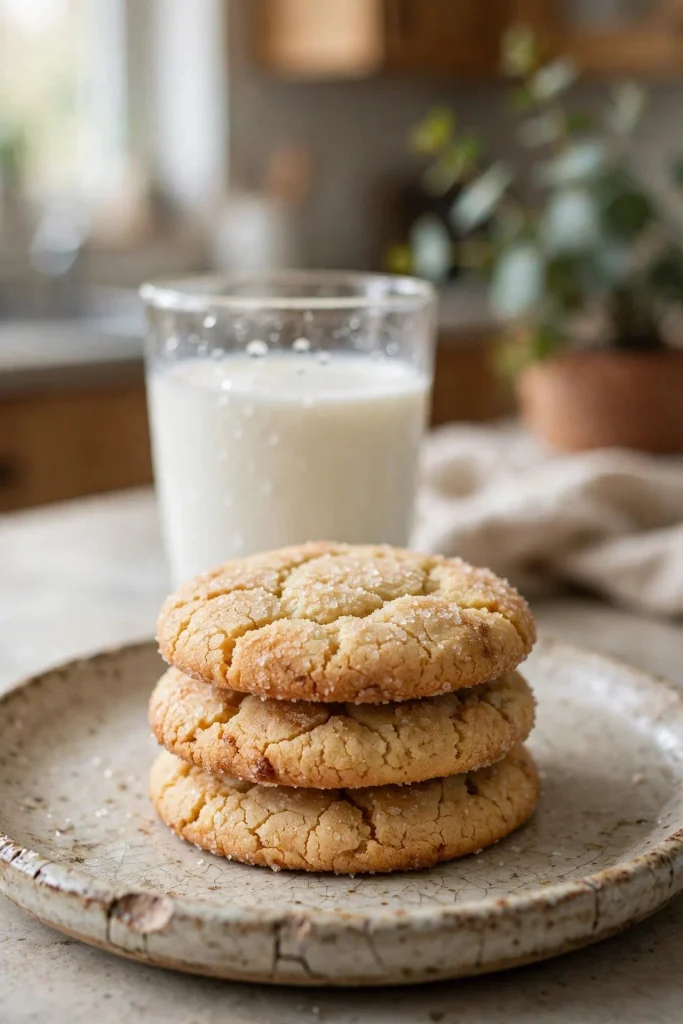
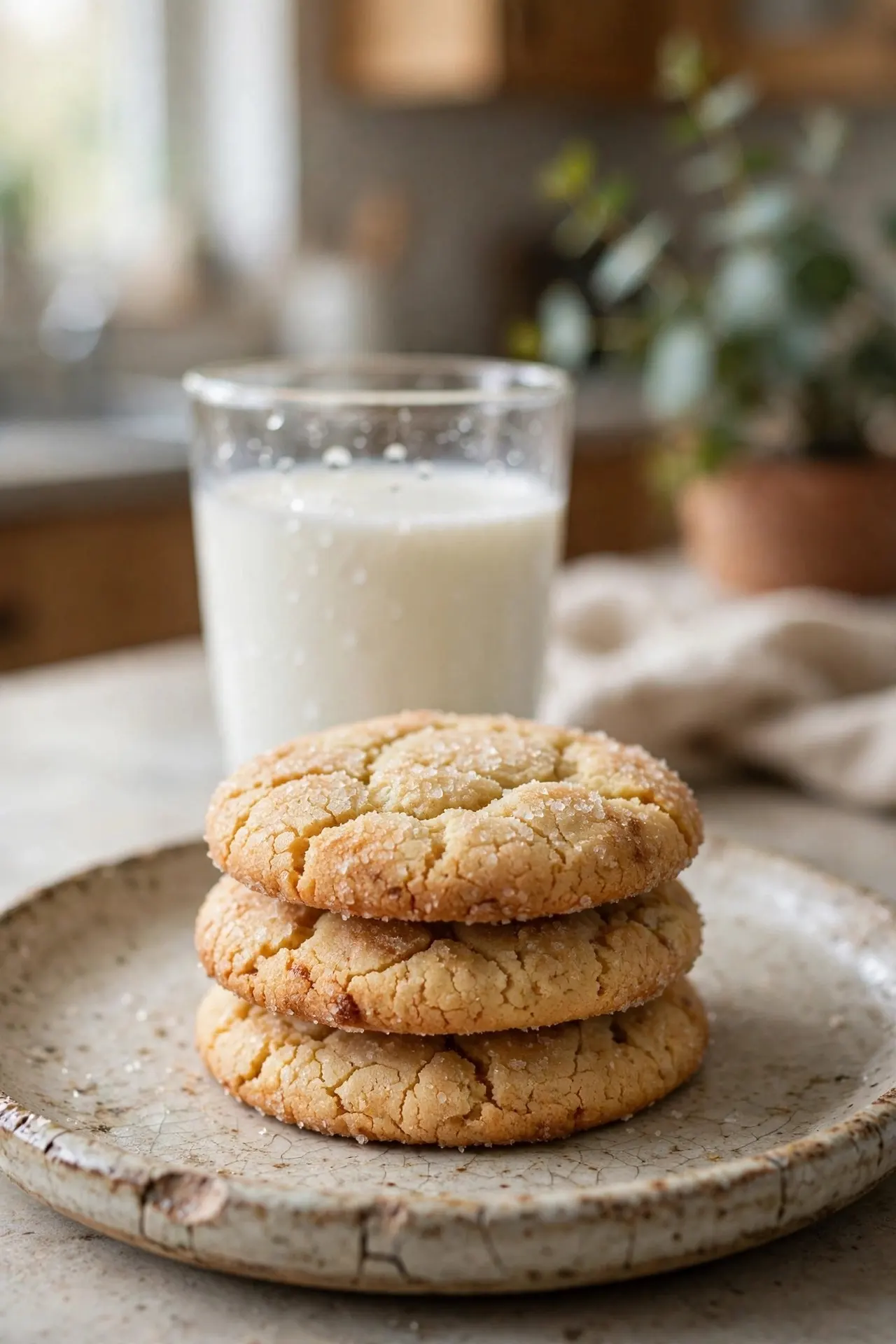
These sugar cookies come out with a slight crackle on top, crisp edges, and centers soft enough to pull apart without crumbling, and none of that comes from icing. It comes from two things most sugar cookie recipes skip: a mix of granulated and powdered sugar in the dough, and a short chill that firms the butter without you having to plan a day ahead. The result is a sugar cookie that’s good enough to eat plain off the tray, though it takes a glaze fine if that’s what you’re after.
Quick Facts
- Prep time: 15 minutes, plus 30 minutes chilling
- Bake time: 10 minutes
- Total time: 55 minutes
- Yield: 24 cookies
- Method: Baked, drop cookie
- Calories: ~180 kcal per cookie (estimated, see Nutrition below)
Why This Recipe Works
Powdered sugar keeps the centers soft. The small amount of cornstarch naturally present in powdered sugar interrupts gluten development just enough to keep these sugar cookies tender days after baking, instead of turning hard and dry by day two.
A short chill controls the spread. Thirty minutes in the refrigerator firms the butter enough that the cookies hold their shape in the oven instead of melting into flat, thin discs before the edges have a chance to set.
Rolling in sugar before baking does double duty. It gives the outside a light crunch and a crackled look without any extra steps, and it means these sugar cookies don’t need icing to look finished.
Ingredients
- 1 cup (226g) unsalted butter, softened
- 1 cup (200g) granulated sugar, plus extra for rolling
- ½ cup (100g) powdered sugar
- 1 large egg
- 1 egg yolk
- 1 teaspoon vanilla extract
- ½ teaspoon almond extract (optional)
- 2¾ cups (345g) all-purpose flour
- ½ teaspoon baking soda
- ¼ teaspoon baking powder
- ½ teaspoon salt
Equipment
A hand mixer or stand mixer makes creaming the butter and sugars faster, though a sturdy whisk and some effort work fine too. Two baking sheets let you bake in batches without the dough sitting out and softening while it waits.
Substitutions
- Butter swap: Salted butter works if that’s what’s on hand; just cut the added salt to ¼ teaspoon.
- No almond extract: Leave it out entirely and use 1½ teaspoons vanilla extract instead; the cookies will taste slightly less bakery-style but still good.
- Gluten-free flour: A 1:1 gluten-free baking blend can replace the all-purpose flour, though the texture will be slightly more crumbly and less chewy.
- Egg-free version: Replace the whole egg and yolk with ¼ cup unsweetened applesauce; expect a denser, less rich cookie.
Step-by-Step Instructions
1. Cream the butter and sugars. In a large bowl, beat the softened butter, granulated sugar, and powdered sugar together for about 1 minute, just until combined and no streaks of butter remain. Avoid overcreaming here; too much air in the dough is part of what makes sugar cookies spread too thin in the oven.
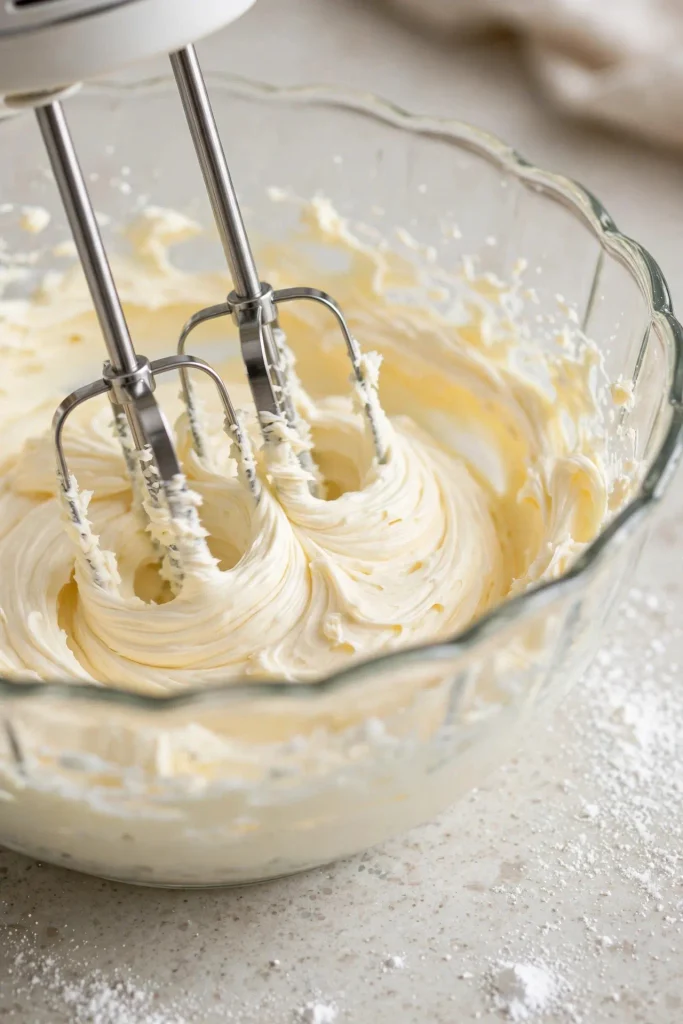
2. Add the egg and extracts. Beat in the egg, egg yolk, vanilla extract, and almond extract if using, until fully combined and the mixture looks smooth and slightly lighter in color.
3. Mix in the dry ingredients. Whisk the flour, baking soda, baking powder, and salt together in a separate bowl, then add to the wet mixture in two additions, stirring just until no dry streaks remain. Overmixing at this stage is the most common reason sugar cookies come out tough instead of tender.
4. Chill the dough. Cover the bowl and refrigerate for 30 minutes. This step is what keeps the cookies from spreading thin; don’t skip it even if you’re short on time.
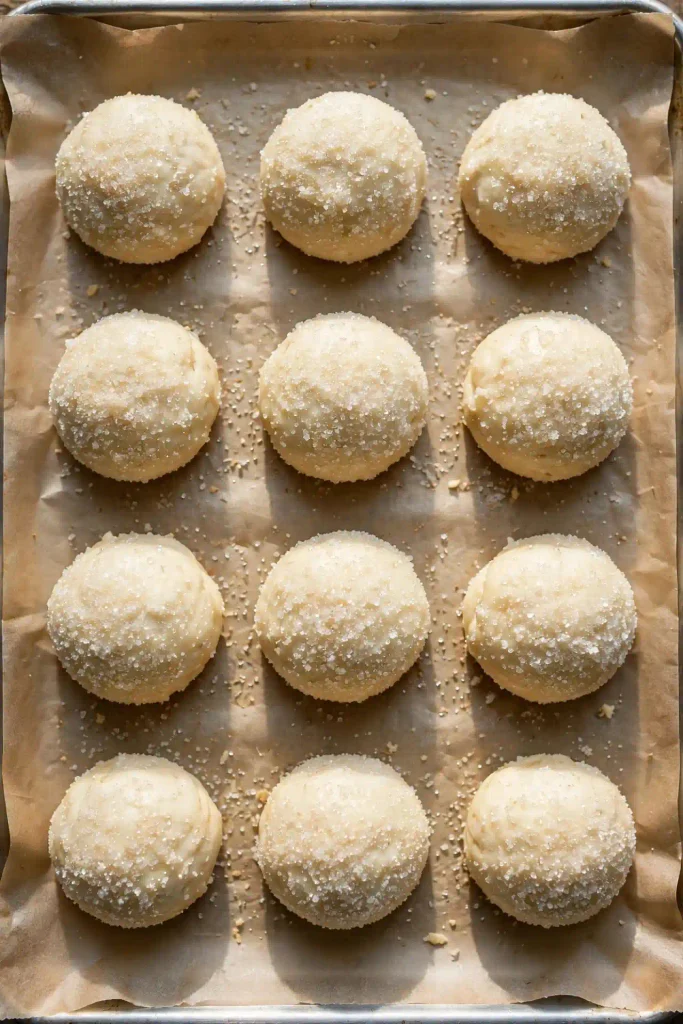
5. Shape and roll. Preheat the oven to 350°F (175°C) and line two baking sheets with parchment paper. Scoop the dough into 1½-tablespoon balls, roll each one between your palms, then roll it in granulated sugar until fully coated.
6. Bake. Place the dough balls 2 inches apart on the prepared sheets. Bake for 9 to 11 minutes, until the edges are just set and very lightly golden but the centers still look slightly underbaked. Sugar cookies continue cooking on the hot pan after they come out of the oven, so pulling them a minute early keeps the centers soft.
7. Cool and serve. Let the cookies rest on the baking sheet for 5 minutes before transferring them to a wire rack to cool completely. Serve sugar cookies plain, or top with a simple glaze once fully cooled.
Tips
- Use a kitchen scale for the flour if you have one; measuring by volume is the most common source of dry, cakey sugar cookies.
- Roll the dough balls in sugar right before baking, not ahead of time, so the sugar doesn’t dissolve into the dough while it sits.
- Rotate the baking sheets halfway through if your oven bakes unevenly.
Common Mistakes
Cookies spread too thin and flat. Cause: dough wasn’t chilled long enough, or the butter was too warm when creamed. Fix: chill the full 30 minutes, and use butter that’s soft to the touch but still cool, not melted or greasy.
Cookies taste dry or cakey. Cause: too much flour, usually from scooping directly from the bag instead of spooning it into the measuring cup. Fix: spoon flour into the cup and level it off with a knife, or weigh it for accuracy.
Centers stay raw or gummy. Cause: underbaked past the point of “slightly soft” into genuinely undercooked. Fix: look for edges that are set and just barely golden; the centers will firm up as the cookies cool on the pan.
Storage
Store sugar cookies in an airtight container at room temperature for up to 5 days. A slice of bread in the container helps keep them soft longer, since the cookies pull moisture from the bread instead of drying out.
Freezing
Both the dough and the baked cookies freeze well. Freeze rolled, sugared dough balls on a tray until solid, then transfer to a freezer bag for up to 3 months; bake straight from frozen, adding 1 to 2 minutes to the bake time. Baked cookies freeze in an airtight container for up to 2 months.
Reheating
These cookies don’t need reheating, but a few seconds in the microwave brings back a fresh-baked warmth if you want it, just enough to soften the edges slightly without melting the sugar coating.
Variations
- Glazed version: Whisk 1 cup powdered sugar with 2 tablespoons milk and ½ teaspoon vanilla, then drizzle over cooled cookies.
- Holiday sugar cookies: Add food coloring to a portion of the dough, or roll in colored sanding sugar instead of plain granulated sugar.
- Brown butter version: Brown the butter first and let it cool to room temperature before creaming, for a deeper, nuttier flavor.
What to Serve With It
Sugar cookies pair naturally with a glass of cold milk or a cup of coffee. For a dessert spread, serve them alongside chocolate chip cookies or a simple fruit salad to balance the sweetness.
FAQ
Why did my sugar cookies come out flat? The dough likely wasn’t chilled long enough, or the butter was too soft when it went into the oven. A full 30-minute chill firms the fat enough to hold the cookie’s shape while it bakes.
Do I need to chill the dough overnight? No. Thirty minutes in the refrigerator is enough to firm the butter for this recipe; a longer chill won’t hurt, but it isn’t required.
Can I make sugar cookies without a mixer? Yes, a sturdy whisk or wooden spoon works, though creaming the butter and sugar by hand takes a bit more effort and time to reach the same smooth texture.
Why do these sugar cookies use both granulated and powdered sugar? The powdered sugar’s small amount of cornstarch helps keep the crumb tender, while the granulated sugar helps with browning and the classic crackled top.
Can I double this sugar cookie recipe? Yes, all ingredients double cleanly. Chill the dough in two batches if your refrigerator space is limited, since a single large mass of dough takes longer to chill through.
Sugar Cookies Recipe
Ingredients
Equipment
Method
- Cream butter, granulated sugar, and powdered sugar together for about 1 minute.
- Beat in egg, egg yolk, vanilla, and almond extract if using.
- Whisk flour, baking soda, baking powder, and salt together; mix into the wet ingredients just until combined.
- Chill dough 30 minutes.
- Preheat oven to 350°F (175°C). Roll dough into 1½-tablespoon balls, then roll in granulated sugar.
- Bake 9–11 minutes, until edges are set and centers still look slightly soft.
- Cool 5 minutes on the pan, then transfer to a wire rack.