Chocolate Chip Cookies Recipe
Introduction
Most homemade chocolate chip cookies don’t fail on flavor. They fail on shape. The dough goes into the oven looking right and comes out flat, greasy, and thin, not the thick, chewy cookie you had in mind. Two things fix this, and most recipes skip both: an actual chill time, and a sugar ratio chosen for a reason instead of habit. Do those two things and you get crisp edges, a soft center, and a cookie that holds its shape instead of spreading into a puddle.
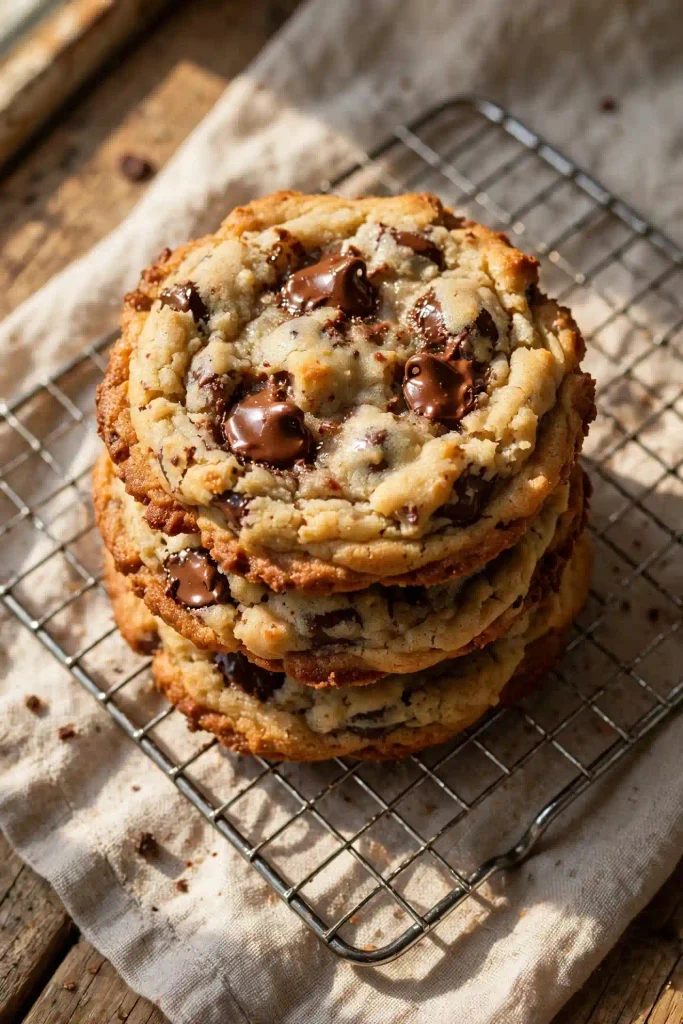
Quick Facts
- Prep time: 15 minutes
- Chill time: 30 minutes (recommended, see Tips)
- Cook time: 10–12 minutes per batch
- Total time: about 55 minutes
- Yield: about 24 cookies
- Difficulty: Easy
Why This Recipe Works
- Leaning on brown sugar over white keeps these moist and chewy instead of crisp straight through.
- Chilling firms the butter back up. That’s the single biggest factor in whether a cookie spreads thin or holds its shape.
- Pull them while the centers still look a little underdone. They finish setting on the hot pan, which is what keeps the middle soft instead of dry and cakey.
- One bowl, one mixer, nothing specialized.
The Sugar Ratio, Explained
Most chocolate chip cookie recipes split the sugar close to evenly between white and brown and never say why. This one leans brown on purpose. Brown sugar carries molasses, and molasses does two jobs granulated sugar can’t. It holds onto moisture, so the crumb stays soft even a day or two later. And its mild acidity reacts with the baking soda, helping the edges lift and brown without spreading flat.
Granulated sugar still earns its place here: it’s what gives the edges their light crispness. But if you want the cookie chewier than this recipe delivers as written, push the ratio further toward brown sugar, up to 1½ cups brown against ½ cup white. Nothing else needs to change.
Ingredients
- 1 cup (226g) unsalted butter, softened
- ¾ cup (150g) granulated sugar
- 1 cup (220g) packed light brown sugar
- 2 large eggs
- 2 tsp (10ml) vanilla extract
- 2¼ cups (280g) all-purpose flour
- 1 tsp (5g) baking soda
- 1 tsp (5g) salt
- 2 cups (340g) semisweet chocolate chips
Ingredient Notes
- Soften the butter, don’t melt it. Melted butter spreads faster in the oven and makes for a thinner cookie, chilling or not.
- Weigh the flour if you can. A cup of scooped flour can land anywhere from 120g to 150g depending on how packed it is. That range alone is often the real reason one baker’s cookies turn out dry and another’s turn out perfect from the exact same recipe. No scale? Spoon the flour into the cup and level it off rather than scooping straight from the bag.
- Chocolate chips can be swapped for chopped chocolate bars if you want uneven, bakery-style pools of chocolate instead of uniform chips. No other changes needed.
Equipment
- Stand mixer or hand mixer
- Baking sheets lined with parchment paper
- A kitchen scale, optional, but the most reliable way to get the same result twice
- A cookie scoop, for even sizing and even baking
Substitutions
- Salted butter instead of unsalted: fine, just cut the added salt to ½ tsp so the cookies don’t taste over-salted.
- All-purpose flour → a 1:1 gluten-free blend: works, though cookies tend to spread a bit more. Chill closer to an hour to offset it.
- Dark chocolate chips instead of semisweet: works well and pulls back the overall sweetness. Nothing else to adjust.
Step-by-Step Instructions
- Cream the butter and sugars. Beat the softened butter with both sugars on medium speed until light and fluffy, 2–3 minutes. This is where air gets worked into the dough, so don’t rush past it.
- Add eggs and vanilla. Beat in the eggs one at a time, then the vanilla, until fully combined.
- Mix the dry ingredients separately. Whisk together the flour, baking soda, and salt in a second bowl.
- Combine. Add the dry mix to the wet in two additions, mixing on low just until the streaks disappear. Overmixing here builds gluten and toughens the cookie.
- Fold in the chocolate chips by hand.
- Chill the dough, 30 minutes minimum, up to 24 hours. This one step does more to prevent flat cookies than anything else in the recipe.
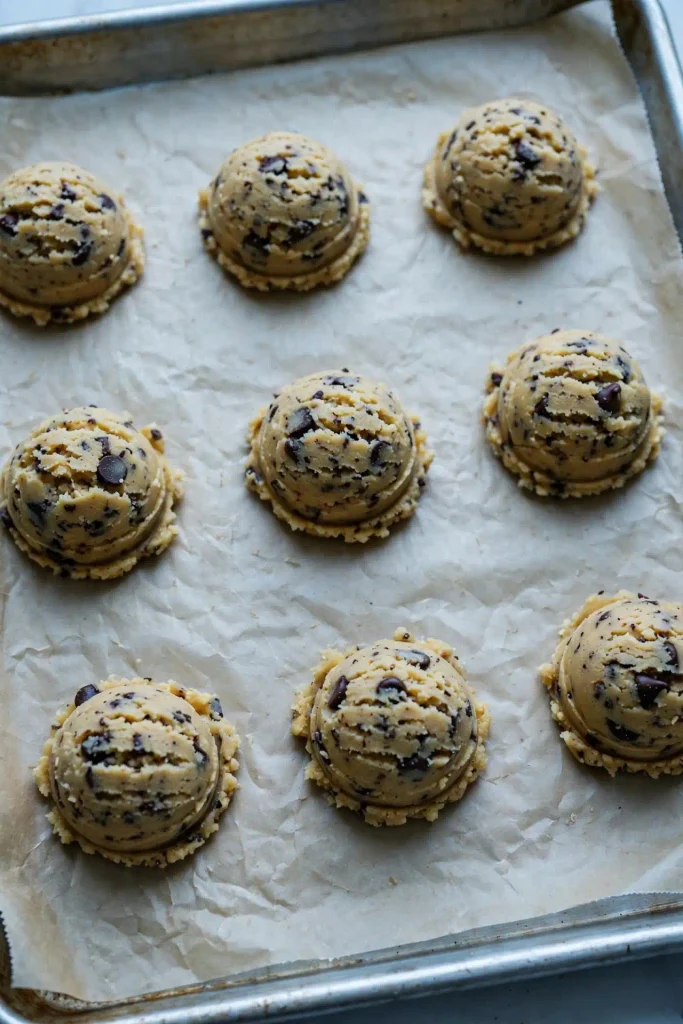
- Preheat the oven to 350°F (175°C) while the dough chills.
- Scoop and bake. Portion into 1½-tablespoon scoops, spaced 2 inches apart on parchment-lined sheets. Bake 10–12 minutes, until the edges are golden and the centers still look a little underdone and puffy.
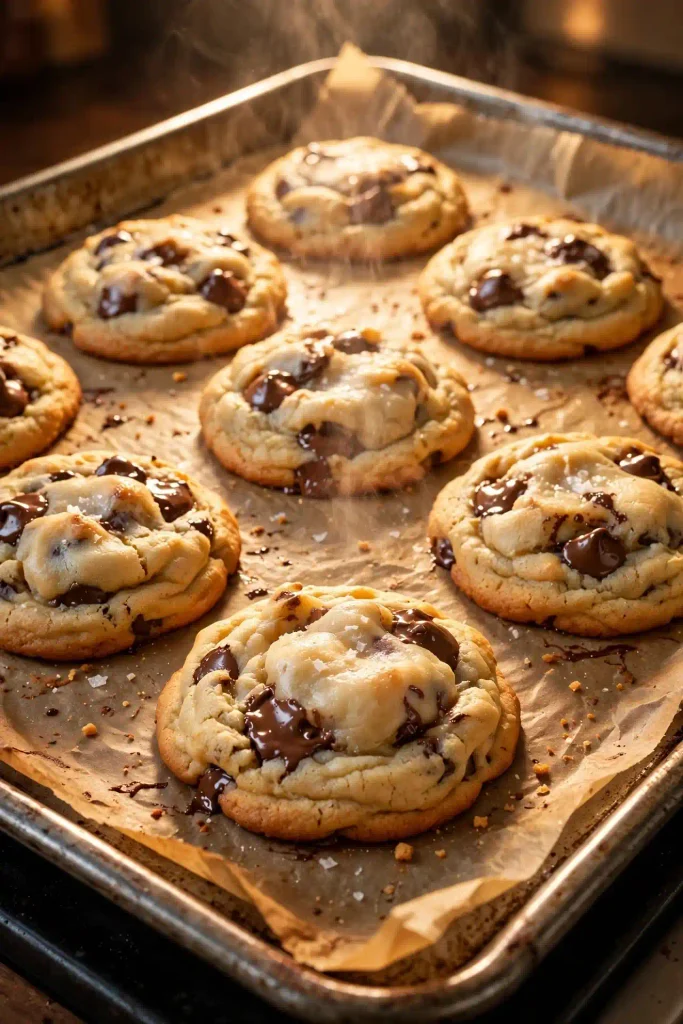
- Cool on the pan for 5 minutes before moving to a wire rack. Straight off the oven, they’re too soft to lift cleanly.
Tips
- Even 15 minutes of chilling beats skipping it, but 30 is where you really see the difference.
- The slightly underbaked look when they come out is intentional. If the centers look fully set in the oven, they’ll be dry by the time they cool.
- Press a few extra chips onto the tops of the dough balls before baking. Small thing, but it gives that bakery-display look.
Troubleshooting Guide
| Problem | Likely cause | Fix |
|---|---|---|
| Cookies spread flat and thin | Dough wasn’t chilled, or butter was too soft or melted | Chill at least 30 minutes; butter should be soft but still cool to the touch |
| Cookies are dry or cakey | Overbaked, or too much flour went in (scooped instead of weighed) | Pull them while the centers still look underdone; weigh the flour if you can |
| Cookies taste flat or bland | The creaming step got rushed | Give it the full 2–3 minutes, most of the flavor comes from here |
| Still pale and underdone-looking past 12 minutes | Oven runs cool, or dough went in very cold | Add 1–2 minutes; check your oven’s actual temperature with a thermometer if this keeps happening |
| Bottoms burn before the centers finish | Dark baking sheet, or oven running hot | Switch to a lighter-colored sheet, or drop the oven temp 10–15°F |
| Cookies barely spread and stay domed | Too much flour, or dough baked stone-cold straight from a long chill | Let dough sit at room temperature 10 minutes first if it’s been chilling more than a few hours |
Storage
Keep in an airtight container at room temperature for up to a week. A slice of bread in the container helps them stay soft.
Freezing
The dough freezes well, better than the baked cookies, honestly. Scoop into balls, freeze solid on a tray, then bag them for up to 3 months. Bake straight from frozen, adding a minute or two. Baked cookies freeze fine too, up to 3 months in an airtight container.
Reheating
Ten seconds in the microwave brings back that fresh-baked softness, even from frozen.
Variations
- Browned butter: brown it first, cool it back to a soft, spreadable state, then cream as usual. Deeper, nuttier flavor.
- Sea salt finish: a pinch of flaky salt right after baking, for the sweet-salty contrast.
- Add nuts: ½ cup chopped walnuts or pecans folded in with the chips.
What to Serve With It
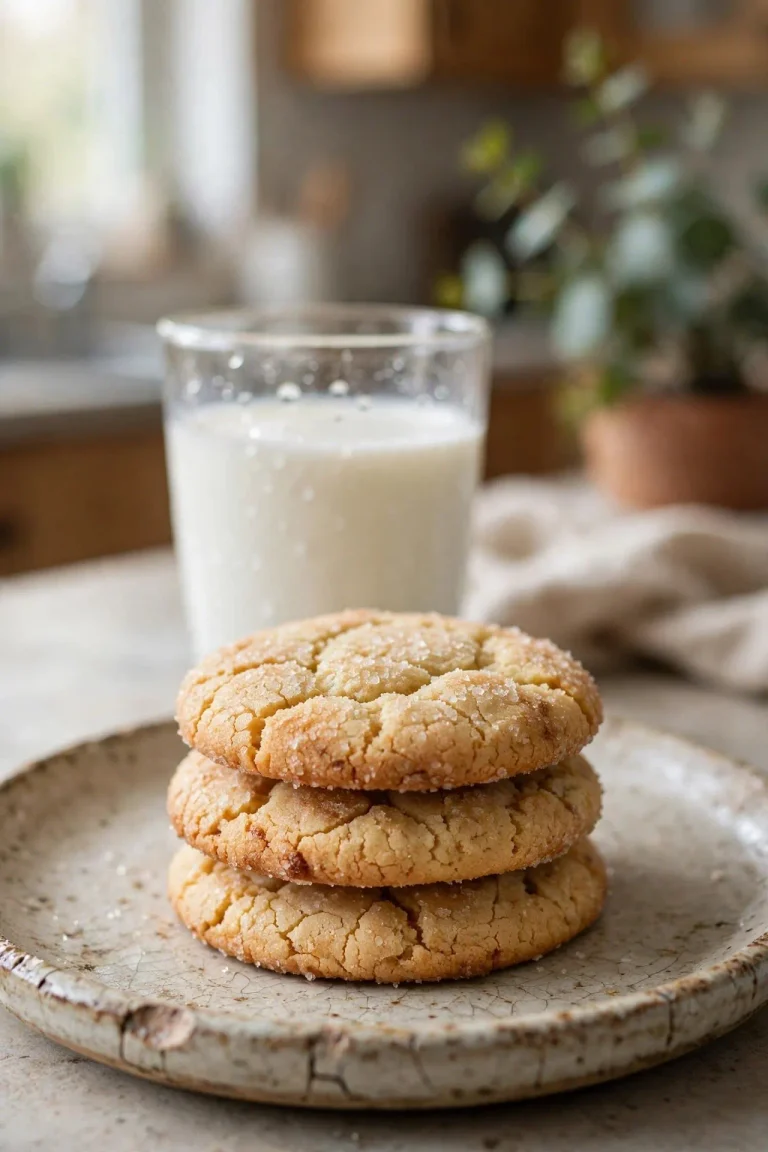
- Cold milk, the obvious pairing, and still the best one
- Vanilla ice cream, sandwiched between two cookies while they’re still warm
- Coffee or tea, for the afternoon version of this
FAQ
Why did my chocolate chip cookies come out flat? Underchilled dough, or butter that went in too soft or melted, almost every time. Chilling for at least 30 minutes firms the butter back up and slows the spread in the oven.
Can I make the dough ahead of time? Yes. It holds in the fridge up to 24 hours, and the flavor actually gets a little better the longer it sits. It freezes well too, up to 3 months.
Why do bakery cookies look different from homemade ones? They’re usually bigger, and made with chopped chocolate bars instead of chips, which gives those uneven pools of chocolate instead of uniform dots. That swap works fine in this recipe too.
Do I really need to chill the dough? You don’t have to, but skipping it is the single most common reason cookies end up thin and greasy. Even a short 15-minute chill makes a real difference.
Why does this chocolate chip cookies recipe use more brown sugar than white? The molasses in brown sugar holds moisture and reacts with the baking soda, which is what keeps the center chewy instead of crisp. The Sugar Ratio, Explained section above goes into the actual mechanism.
Can I double the recipe? Yes, everything scales directly. Chill time and bake time don’t change; you’ll just be running more batches through the oven.
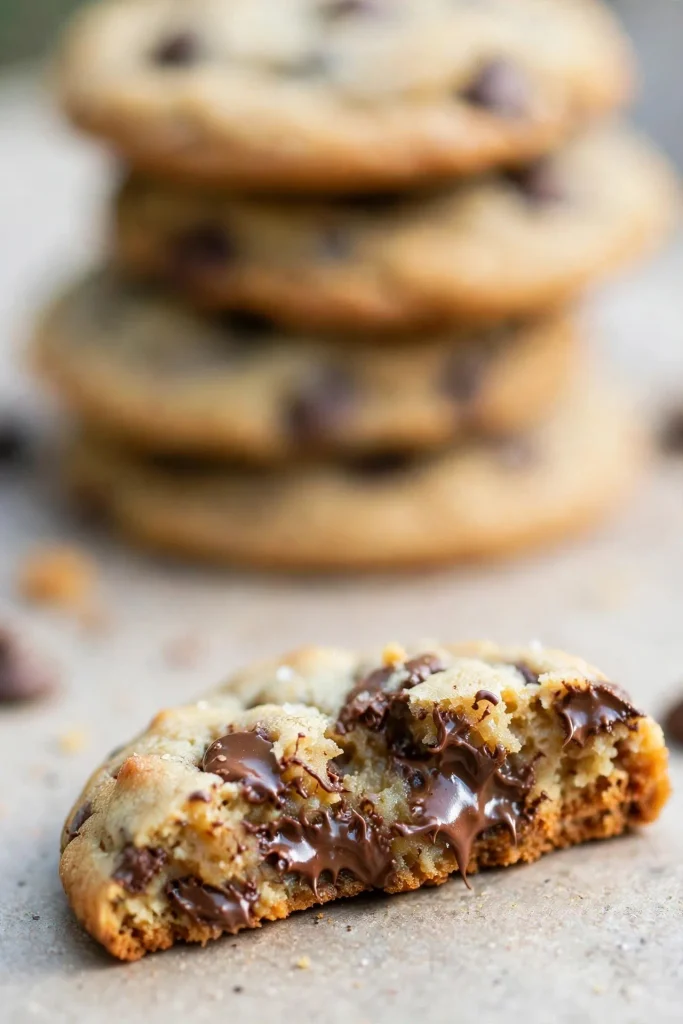
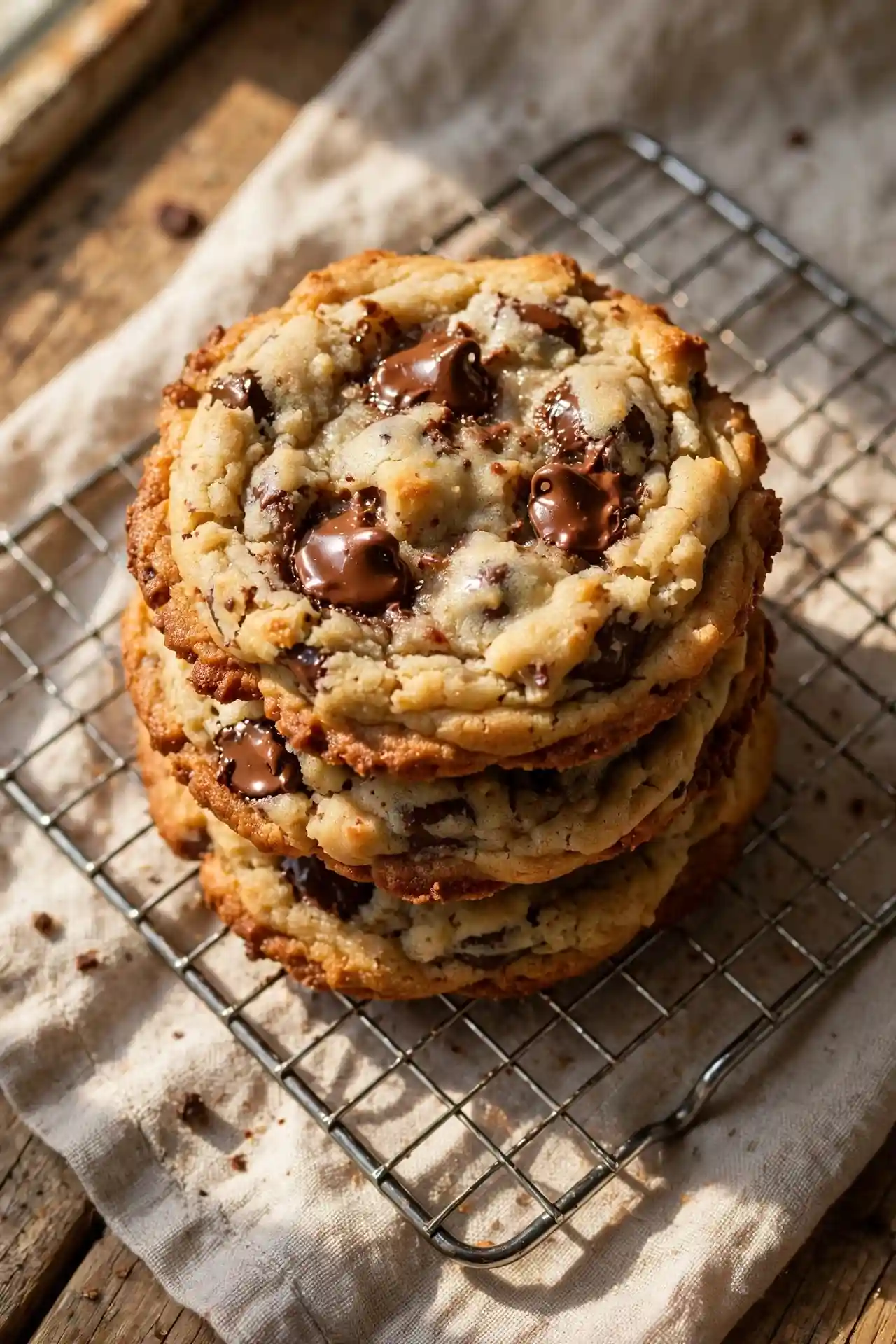
Chocolate Chip Cookies Recipe
Ingredients
Method
- Cream butter and both sugars until light and fluffy, 2-3 minutes.
- Beat in eggs one at a time, then vanilla.
- Whisk flour, baking soda, and salt separately.
- Combine dry into wet in two additions, mixing just until no dry streaks remain.
- Fold in chocolate chips by hand.
- Chill dough at least 30 minutes (up to 24 hours).
- Preheat oven to 350°F (175°C).
- Scoop 1½-tablespoon portions, space 2 inches apart, bake 10-12 minutes until edges are golden and centers look slightly underdone.
- Cool on the pan 5 minutes before moving to a wire rack.
- nutrition: [Run through your recipe plugin’s calculator before publishing]